
Turkish Airlines Plans 800-Aircraft Fleet and Fully Enclosed Business Class Suites by 2027

Turkish Airlines is setting its sights on becoming one of the world’s dominant long-haul carriers, with a sweeping growth and product upgrade strategy unveiled by its newly appointed chairman, Professor Murat Seker, in a recent interview with Forbes. The airline aims to expand its widebody fleet to more than 800 aircraft by 2033, with an extended target that pushes the same figure to 2036 — a scale that would place it firmly alongside Emirates, Delta, and United as a global aviation heavyweight.
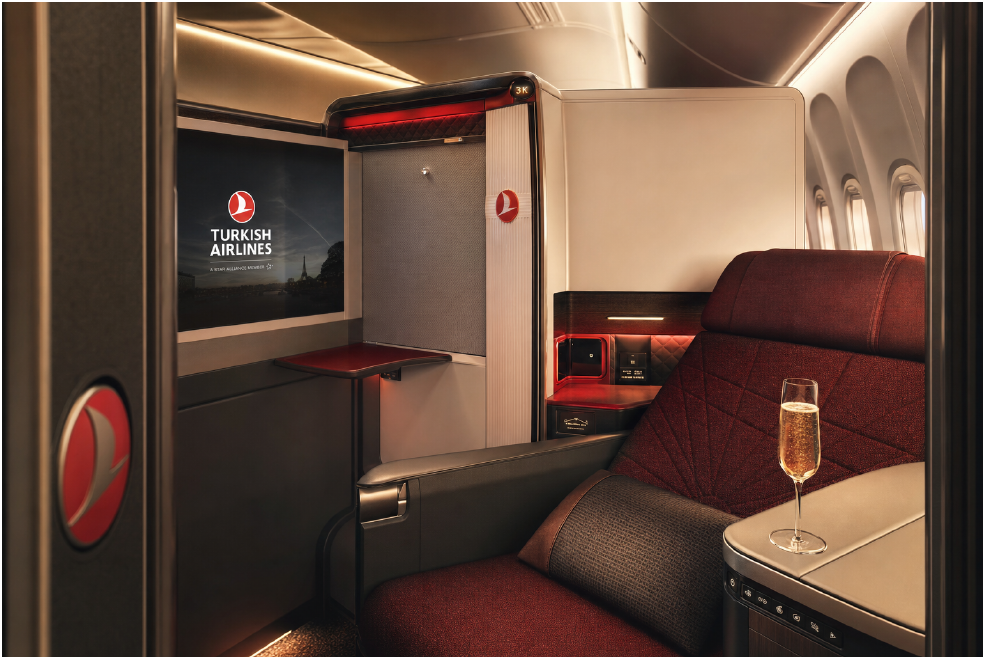
Central to the product upgrade is the introduction of fully enclosed Crystal Business Class suites, modeled on the private suite concepts that have been gaining traction among premium long-haul carriers. These suites are planned for the Airbus A350 fleet from early 2027, with Boeing 777 aircraft to follow in a subsequent retrofit program. The move signals a deliberate shift in positioning: Turkish Airlines, long known for offering strong value at the premium end without the ultra-premium credentials of Gulf carriers, is now explicitly targeting the high-yield business traveler segment.
The airline is also revisiting its cabin configuration strategy more broadly. Premium economy — a cabin class that Turkish Airlines has historically not operated on most widebody routes — is being considered for reintroduction by 2028. This would give the carrier a four-class product on many long-haul routes, in line with competitors such as Lufthansa, British Airways, and Singapore Airlines.
The ambitions extend beyond product. Turkish Airlines is reportedly in active talks with both Boeing and Airbus about a large widebody purchase that would underpin the fleet expansion. Current fleet discussions include the Airbus A350, A330neo, Boeing 787, and 777X — a broad shortlist that suggests the airline has not yet decided on a preferred type and may ultimately place orders with both manufacturers.